TattoosLuv
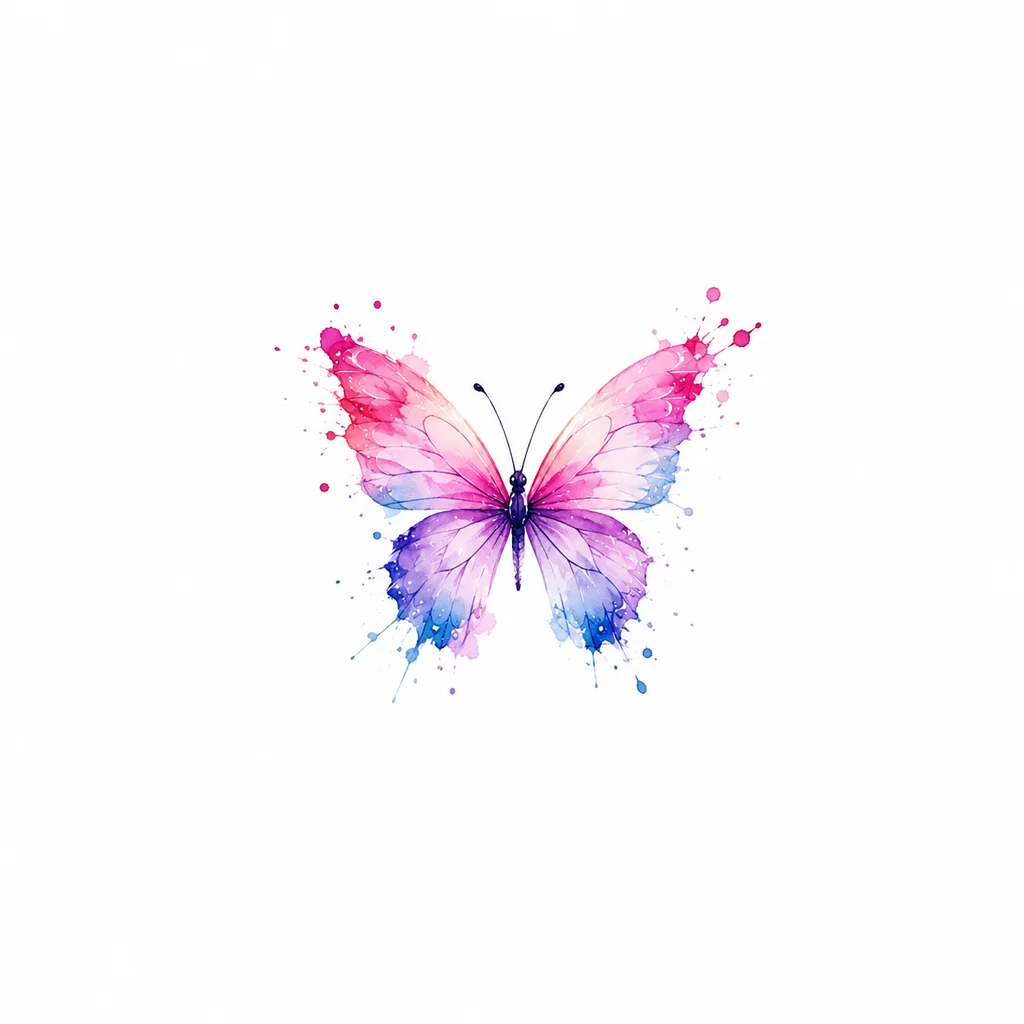
Watercolor butterfly tattoo representing transformation and rebirth

Butterfly Tattoo Meaning & Symbolism

Butterfly tattoos symbolize transformation, rebirth, and freedom. Their meaning spans cultures from Greek mythology (psyche/soul) to Japanese folklore and the Mexican Día de los Muertos.

## Symbolism The butterfly is one of the most enduring symbols in tattoo culture, and its core meaning is almost universal: transformation. The metamorphosis from caterpillar to chrysalis to winged adult is one of nature's clearest visual metaphors for personal change. People who choose butterfly tattoos are often marking a passage — recovery from illness or addiction, the end of a difficult relationship, surviving grief, coming into their own identity, or simply growing past who they used to be. Beyond transformation, butterflies carry layered meanings: freedom (the ability to fly away from what bound you), rebirth (emerging as something fundamentally different), and resilience (a fragile creature that nonetheless travels great distances). For many, the design also represents the soul itself — light, brief, and beautiful. ## History & Mythology The butterfly's symbolic weight comes from thousands of years of cultural meaning, not just modern tattoo trends. **Greek mythology** linked butterflies and the soul so closely that the Greek word *psyche* meant both. Psyche, the mortal woman beloved by Eros, is often depicted with butterfly wings — the symbol of the soul made visible. **Japanese folklore** treats butterflies (*chōchō*) as the souls of the living and the dead. A single white butterfly entering a home is sometimes seen as the spirit of a recently departed loved one. Two butterflies dancing together symbolize marital happiness. **Mexican tradition** ties the orange-and-black monarch butterfly to *Día de los Muertos*. Monarch migrations bring millions of butterflies to central Mexico in early November, coinciding with the Day of the Dead celebrations — they're widely believed to be the returning souls of ancestors. **Chinese culture** treats the butterfly as a symbol of love, drawn from the legend of Liang Shanbo and Zhu Yingtai — two lovers who, separated in life and reunited in death, transformed into a pair of butterflies that fly together forever. **Native American traditions** vary by tribe but often associate butterflies with joy, transformation, and the carrying of prayers. ## Style Variations Butterfly tattoos work in nearly every tattoo style, which is part of why they remain endlessly popular. - **Minimalist** — single-line or simple geometric butterflies, perfect for first tattoos. Best on wrist, ankle, finger, behind ear. - **Fine line** — delicate detailed wing patterns in thin black ink. Best on wrist, forearm, hip, collarbone. - **Watercolor** — soft color washes that bleed beyond the linework, often with paint-splash effects. Best on shoulder, back, thigh — anywhere with enough canvas for the color to flow. - **Geometric** — butterflies built from triangular facets and crystalline shapes. Modern and unisex. Best on forearm, calf, back. - **Blackwork** — solid black silhouettes, often with white negative-space details. Bold and statement-making. Best on back, sleeve, chest. - **Realistic 3D** — photorealistic butterflies that look like they've landed on the skin. Best on shoulder, back, thigh. - **Traditional / neo-traditional** — bold black outlines and saturated color blocks, drawing on classic American flash. Best on arm, chest. ## Placement Guide Butterfly placement is largely about size and visibility tradeoffs: - **Wrist** (small, visible) — the most popular butterfly placement. Easy to show or conceal with a watch. - **Ankle** (small, mostly hidden) — quiet placement that peeks out with sandals. - **Behind ear** (tiny, hidden) — discreet, perfect for a first tattoo with private meaning. - **Collarbone** (small to medium, framed by necklines) — elegant and easy to show off when you choose to. - **Shoulder** (medium to large, semi-visible) — great canvas for watercolor pieces. - **Back / shoulder blade** (large, hidden) — best for blackwork, realistic, and statement pieces. - **Hip** (small to medium, intimate) — mostly private, usually a personal symbol. - **Finger** (tiny, visible) — bold daily wear, but tends to fade faster than other placements. Pain levels vary: outer arm, outer shoulder, and outer thigh are the lowest pain. Wrist and ankle are moderate. Ribs, sternum, hip, and inner wrist are higher pain. ## Choosing Your Design A few questions worth answering before you book: - **What's the meaning for you?** Transformation, freedom, memory of someone, joy of being alive — your answer should shape the style. A solemn memorial butterfly looks different from a celebratory one. - **How visible do you want it?** Consider how the placement reads in everyday clothes vs. summer wear vs. formal occasions. - **Color or black ink?** Color butterflies (especially watercolor) are visually striking but need touch-ups every 5-7 years. Black-and-grey designs hold up longer with less maintenance. - **Will it grow with you?** Butterflies pair well with floral elements, geometric patterns, names, dates, and constellations. If you're planning a larger composition over time, choose a placement that leaves room. When in doubt, start small. A minimalist wrist or ankle butterfly is forgiving, low-commitment, and leaves room for the design to evolve as you do.

Frequently Asked Questions

What does a butterfly tattoo really mean?

Butterfly tattoos symbolize transformation and rebirth — drawn from the caterpillar-to-butterfly metamorphosis. Many people get one to mark a major life change: recovery from illness, leaving a relationship, surviving grief, or coming into a new identity. In Greek mythology, the word 'psyche' meant both 'soul' and 'butterfly,' linking the design to ideas of the soul's journey.

Are butterfly tattoos basic?

Butterfly tattoos are popular, not basic. The design has thousands of variations — single-line minimalist, photorealistic 3D, traditional Japanese chōchō, blackwork silhouettes, watercolor washes — and the symbolism is meaningful to most people who choose one. A skilled artist can make even a small wrist butterfly feel distinctive.

What's a good first butterfly tattoo?

Start small and simple. A minimalist single-line butterfly on the inner wrist or ankle is forgiving — small healing surface, easy to cover, low to moderate pain. You can always add color or detail later: many people return for a watercolor wash years after their original linework.

Do butterfly tattoos age well?

Fine-line and minimalist butterfly tattoos may need touch-ups after 5-10 years because the thin lines can soften over time. Solid-color and blackwork butterflies hold up best. Avoid placements that get heavy sun (top of feet, hands, fingers) for color longevity — and use SPF on any tattoo you want to keep crisp.

Where on the body do butterfly tattoos hurt least?

Outer arm, outer thigh, and shoulder cap are the lowest-pain placements. Wrist and ankle are moderate. Avoid the inner wrist if you're pain-sensitive — the bone is close to the surface. Ribs, sternum, hip, and behind the ear are higher pain.

Should I get a colored or black butterfly tattoo?

Black and grey butterflies last longer with less fading and read clearer at small sizes. Color butterflies — especially watercolor — are visually striking but typically need touch-ups every 5-7 years to stay vibrant. Choose color for a statement piece on a larger placement; choose black-and-grey for a small daily-wear tattoo you want to forget about maintaining.